Your brief.
Our legwork.
The experience is intentionally simple: teach Tandem the business, approve what it should look for, then let it keep researching within those instructions.
Tandem first understands the business.
Website, offers, target sectors, company sizes, territories, personas, competitors, exclusions and proof points become an editable commercial context. Website-derived assumptions stay visible until the user confirms them.
Natural language becomes a structured Mission.
The customer says what they want. Tandem shows exactly how it interpreted the brief before anything becomes active.
Find UK professional-services firms with 20–100 employees that are hiring salespeople.
Tandem keeps looking without another click.
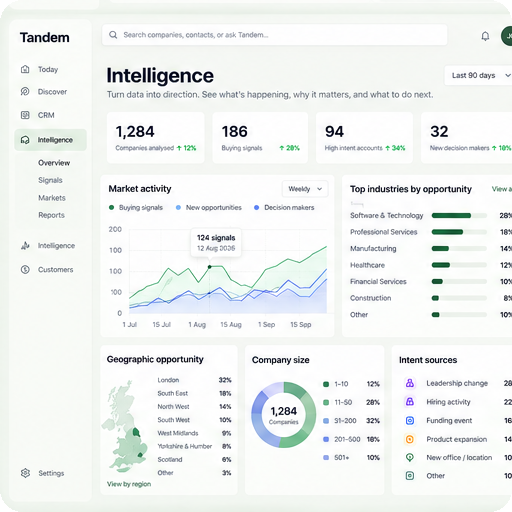
An active Mission keeps discovering new companies and monitoring known companies for materially new evidence. Manual search still exists, but it is no longer the operating model.
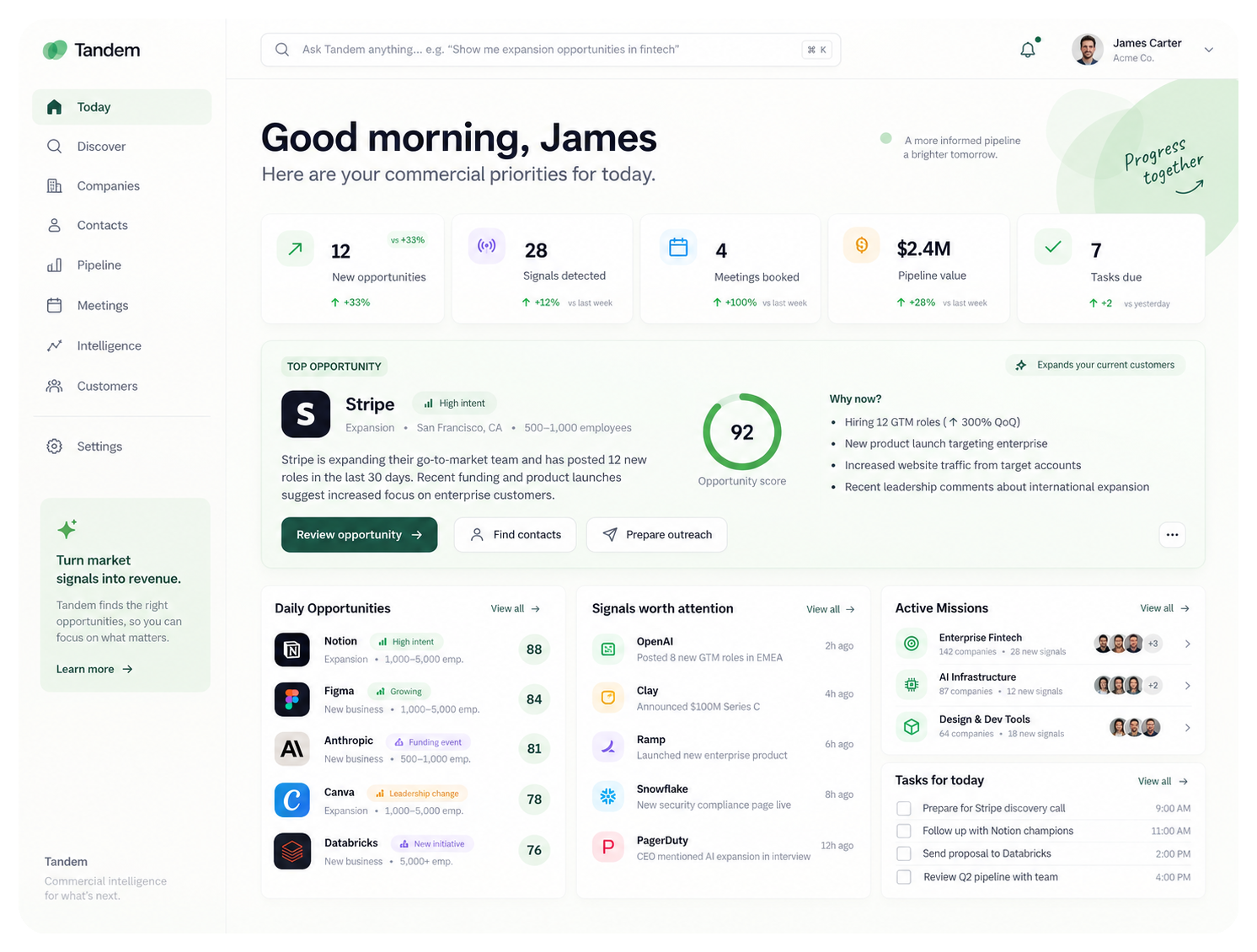
The reason to act stays attached to the evidence.
Tandem separates what it observed from what it inferred. A leadership change, hiring event or expansion is not silently turned into a fabricated buying-intent claim.
“Five sales roles are currently advertised.”
This may make a conversation about scaling the commercial operation more relevant.
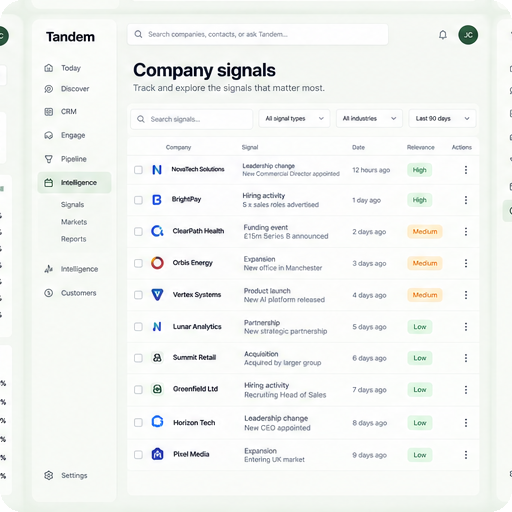
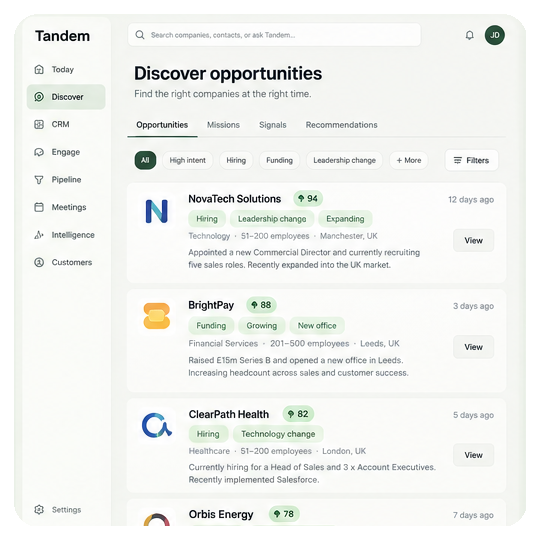
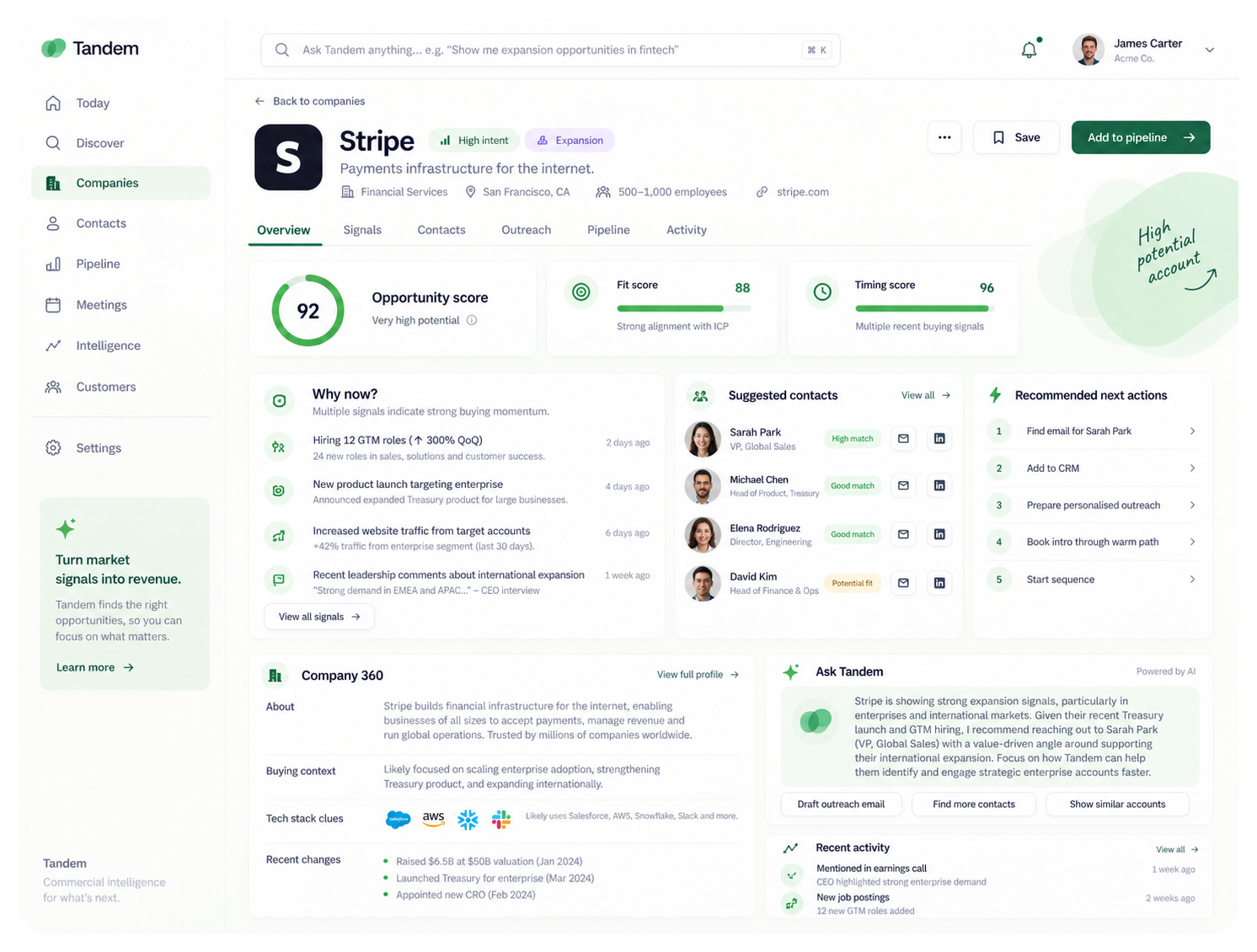
Every opportunity answers the questions a salesperson actually has.
- Why this company?
- What happened?
- Why might it matter now?
- What evidence supports that?
- What remains uncertain?
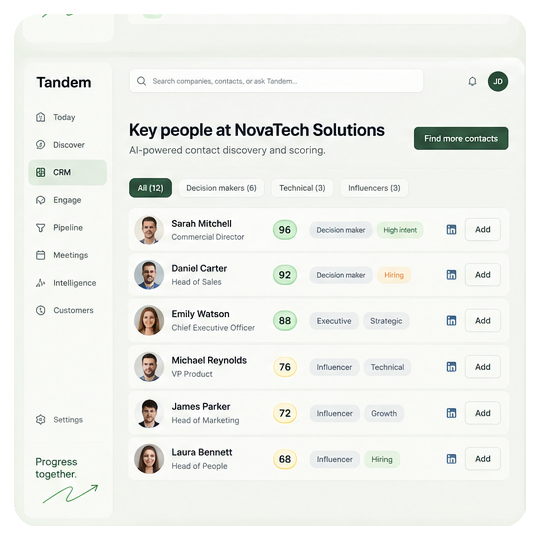
- Who is the relevant decision maker?
- What should happen next?
Research, CRM and outreach stay intentionally separate.
Tandem can recommend “find contacts”, “monitor”, “accept into CRM” or “prepare outreach”. Accepting the company never silently sends a message.
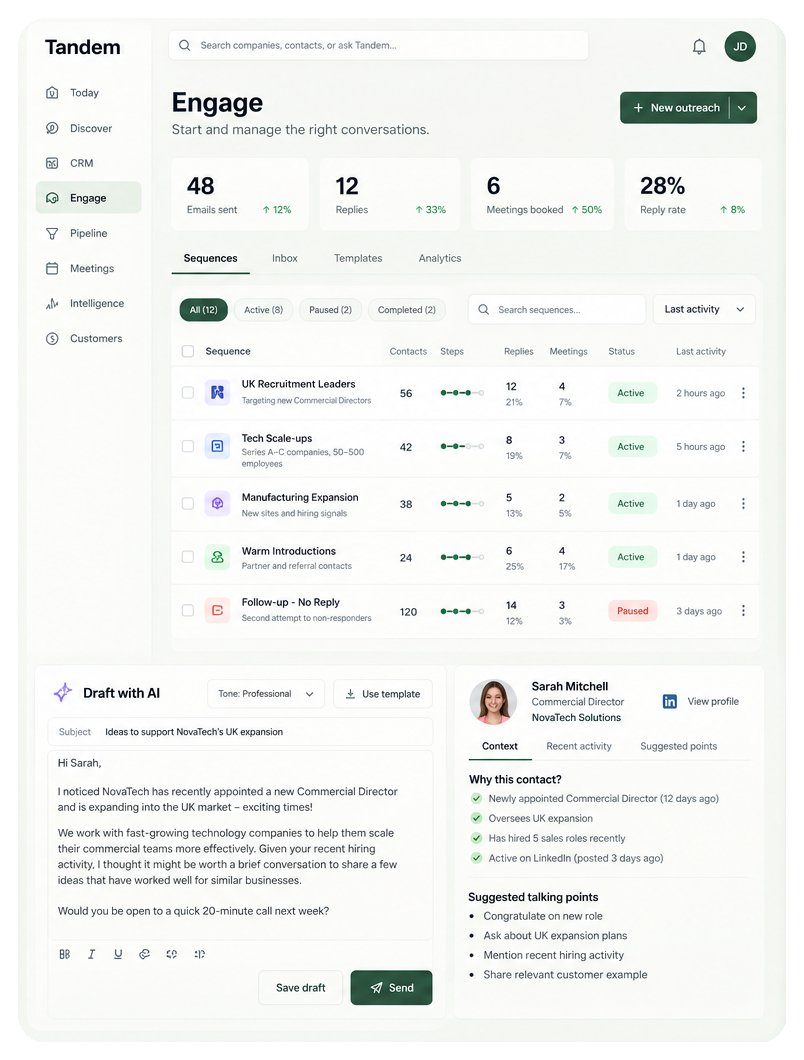
Tandem records what happened, not just what it recommended.
Accepted, rejected, contacted, replied, meeting, opportunity, won and lost outcomes create the basis for better prioritisation over time.